
A tree with a story

When my younger brother was born, my mom planted a spruce tree that was about the same length as her new baby boy.
As we grew up, we watched the tree grow too. It wasn't just another tree. It had a story attached to it.
Years later, I thought about what it would be like if every newborn baby in Central Saanich had a similar story. What if a family planted a tree for their baby and watched the tree grow as their child grew?
I think having a story attached to a tree changes the way we see it. It becomes less likely that we will simply chop it down without much thought. It means something to us.
That thinking eventually led me, as a councillor, to initiate Central Saanich Tree Appreciation Day in 2014.
The District continues to hold a planting event, which is great. But my hope has always been that Tree Appreciation Day would grow beyond a municipally sponsored event and become a wider community tradition. Families, neighbours and community groups can plant trees and create their own stories.
The spruce my mom planted is now about fifty years old. It won't live forever, but it has a different significance because it went from being another tree to being a tree with a story attached to my brother.
Tomorrow is Tree Appreciation Day in Central Saanich. The District will be holding its annual tree planting, and I'll be there.
But Tree Appreciation Day doesn't have to happen only at a District event. Maybe tomorrow is also a good day to plant a tree of your own.
Give it a story. Then watch it grow.
Something Hanke Taught Me 21 Years Ago

Dominion Astrophysical Observatory at night. Image courtesy of the Centre of the Universe.
Twenty-one years ago, during my first term on Council, I was holding my weekly coffee chat at JJ's Café in Brentwood Bay.
A senior named Hanke came by and talked to me about light pollution.
I hadn't given the issue much thought. He explained that unnecessary light at night doesn't just make it harder to see the stars. He also told me about research into artificial light and our natural circadian rhythms.
I went away and learned more. Between January and March 2005, I brought three memoranda to Council about light pollution.
We have a particular reason to think about the night sky here. Just south of Central Saanich is the Dominion Astrophysical Observatory, and protecting the night sky matters for astronomy as well as for those of us who simply enjoy looking up at the stars.
The science has also developed considerably since Hanke first spoke with me. We know that artificial light at night can affect circadian rhythms, although researchers continue to study how ordinary outdoor lighting affects human health.
There are people doing practical work on this today. DarkSky International works to protect the night from light pollution, and the Royal Astronomical Society of Canada, Victoria Centre has a local Night Lighting program with information about reducing unnecessary outdoor light.
I like remembering how this one started.
A resident came to my coffee chat and told me about something I knew little about. I listened, learned more, and took it to Council.
Twenty-one years later, I'm still learning from people who come to talk with me at my cafe chats or elsewhere.
Experience Working Collaboratively


I reached out to Tsawout Councillor Mavis Underwood. Together, we took the issue to the Greater Victoria Transit Commission and asked for better service.
Today, the bus no longer simply passes by. It goes into the community, helping people get to work, medical appointments, shops, or to meet friends.
It started with one person raising a concern, and people from different communities working together to make change happen.
That collaboration is something I've always been proud of.
As your Mayor, I would be committed to improving transit by organizing people in our community to get the changes we need.
Before We Rezone, What Can We Secure for Our Community?

Central Saanich is considering rezoning a large area of the Keating extraction lands to light industrial.
I don't think we need to rush this decision.
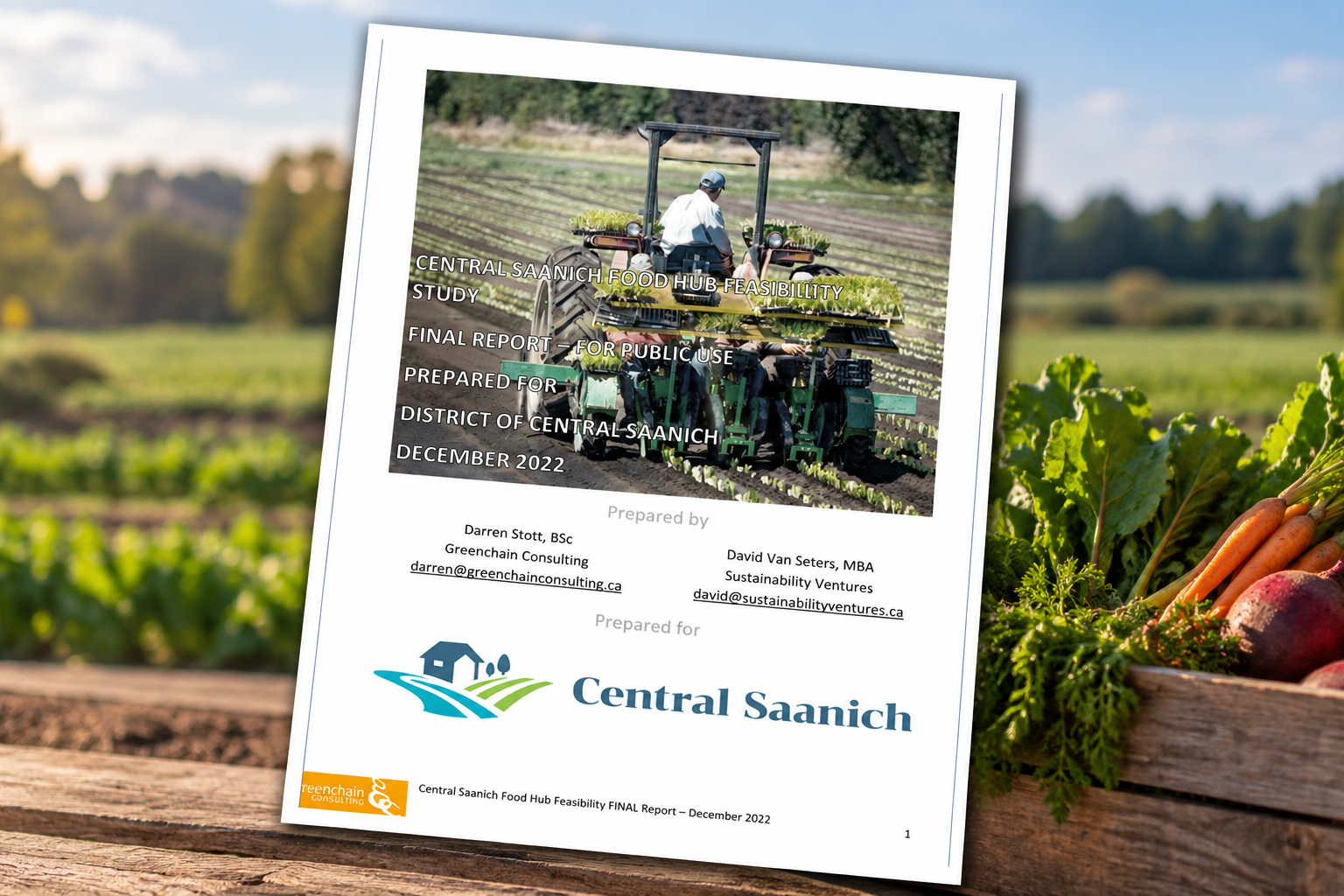
We already know that one of the challenges facing local agriculture is access to food-processing infrastructure. Central Saanich commissioned a Food Hub Feasibility Study that identified the need for more meat-processing and abattoir capacity in our region. (p. 31)
Facilities like these need appropriate land. Industrial land is expensive.
That raises a pretty basic question for me.
Why would we rezone this large area first, and only afterwards try to find affordable industrial land for a food hub?
Once the land is rezoned, a community food hub could find itself competing for land with much larger commercial and industrial interests. How many bake sales would it take for a publicly supported food hub to buy several acres of newly rezoned industrial land?
We have an opportunity now, before rezoning, to explore whether land could be secured for food processing or other community purposes as part of discussions with landowners.
I'm not opposed to light industrial uses here. In fact, our Official Community Plan has contemplated the eventual transition of these extraction lands toward light industrial use for years.
But this is a large area with enormous potential. The current Council does not have to settle every question about its future in its final meetings.
Before we rezone, let's find out what we can secure for the community.
Once the rezoning is complete, that opportunity may be much harder, and much more expensive, to recover.
Read the Central Saanich Food Hub Feasibility Study – Final Report (2022).
A Community for All Ages and Abilities

My years on Council have shown me that the same community can look very different depending on who is experiencing it.
In 2022, I brought forward a motion for Central Saanich to seek grant funding to develop an Age-Friendly Community Plan. Council supported it, we received the grant, and I later had the privilege of chairing the committee.
At our first meeting, one of the questions I was asking was, who isn't yet in the room? I wanted the Central Saanich Senior Citizens' Association represented, but I also wanted a youth voice included.
That matters. If we're trying to understand how people experience their community, we need to hear from people with different experiences.
Can an older person safely cross the street? Can someone using a wheelchair or walker get where they need to go? Is there somewhere to sit and rest? Can everyone actually use our parks and public spaces?
Accessibility shouldn't be something we think about after we've made a decision or built something.
We still have barriers to remove. This week, think of one place in Central Saanich that is difficult or unsafe for you or someone you care about. Send me a message with the location and what you think would make it better. I want to hear from you.
Holding on to a little of our history
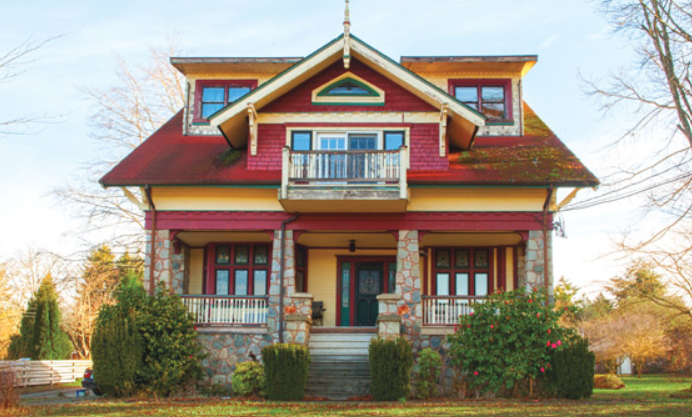
Photo: Seaside Magazine, 2017
Central Saanich doesn't have a great many old heritage homes. Our community was much less developed than places like Victoria, Oak Bay or Esquimalt, so the buildings that remain are particularly important.
Years ago, when Matt Peulen and Stride Properties came before Council with a development near Stelly's, I pushed to preserve Verdier House rather than see it disappear with the development.
The house was retained and still stands there today.
Twenty-one years on Council has given me a long view of decisions like this. Development proposals come and go, but what we decide to keep can be with the community for generations.
Nearly fifteen years ago...

Signs start going up this weekend, and I came across this old video.
This was me nearly 15 years ago, running for Central Saanich Council and looking for some help putting up signs.
I'm running for mayor this time, not councillor, so I should make that part clear. But I thought the video was worth pulling out again. It's a younger Zeb, and a reminder that I've been at this for a while. I've loved being involved in our community and have been honoured to serve.
Over the years I've had the chance to work with and watch four different mayors. I've seen different ways of leading a council, what works and what doesn't, and I've learned from all of them.
This weekend, we'll be putting up signs again.
And yes, we could still use some help.
Nearly fifty years ago

In 1979, my grandmother, Lea King, put her name forward for Central Saanich Council.
I recently pulled out her old campaign leaflet. This line stood out for me:
“I am dedicated to the maintenance of the natural setting of our rural community, to keeping our farmlands as farmlands and our inlets and bays clean and free of contamination.”
Nearly fifty years later, I could say much the same thing. I too am dedicated to protecting the natural setting of our community, our farmland, and the waters around us.
It is interesting to see those words on a piece of paper she folded up and handed out in 1979.
Different generation, but a commitment I share.
An opportunity we could lose

With farmer and former Central Saanich Mayor Jack Mar, holding carrots grown on the farm.
Central Saanich has more than 200 farms, but our own Food Hub Feasibility Study identified a challenge: growing food is only part of the equation. Farmers also need access to processing, storage, equipment and other infrastructure.
When plans for the Keating extraction lands came forward, I saw an opportunity.
Rather than commit all of this land to other uses, I proposed that we identify and preserve space for a food hub. Council didn't support my motion.
But the story isn't over.
These lands come back to Council on September 28.
We have a choice. We can make decisions now that may close off this opportunity, or preserve room for something that could strengthen local farming and food security for decades.
We did the study. We know there is a need.
On September 28, we decide whether to leave the door open.
What I’ve stood for

Former Central Saanich Councillor Wayne Watkins and Councillor Zeb King at the Old School Hall, 2018.
After more than two decades on Central Saanich Council, there are a lot of individual votes, motions and issues I could point to. But looking back, what interests me more are the things I have consistently tried to stand for.
I’ve worked to protect farmland and the environment, support local agriculture and food security, give residents a meaningful say in decisions, build relationships with W̱SÁNEĆ communities, approach growth thoughtfully, and make local government more open and accountable.
I haven't always won the vote. In fact, some of the things I’m proudest of began with asking questions, raising an issue, or standing with residents when Council went another way.
Over the coming weeks I’m going to share some of those stories here. Not because municipal government is about one person’s accomplishments, but because I think a record matters. It tells you something about how a person will govern when the next difficult decision comes along.