
Looking Back at Keating


(The dotted line was proposed for an expansion of the industrial lands. The pink lots were getting farm tax status.)
Following Council’s recent decision to approve the rezoning of the Keating extraction lands, I thought I would share this old video from years ago which again shows the community's values about agricultural land and containing sprawl.
While we were all much younger, the video captures some of the history behind the conversations we are still having today about growth, farmland, industrial land and the future of Keating.
At that meeting, I argued against expanding the Urban Containment Boundary and creating a new “future growth area” and residents spoke very passionately. I also raised concerns about farmland, food security and the consequences of the decisions we make for future generations.
What I also like about the video is that it preserves many different voices.
Residents came forward with questions about transportation, water, servicing costs, agriculture, housing and development. Councillors had different perspectives too. Some of those councillors have since retired. Some are running again. Residents who spoke had their own views and experiences.
All of them are part of the history of the area.
At one point a resident asked a series of questions about the costs and consequences of future development. My answer was simply that we did not know because we had not yet done that work.
The research hadn't been done, but there were councillors who were prepared to keep the expansion on the table as a long-term option.
At 19:26, one councillor said:
“I think the future growth area is a good idea. This is not about development tomorrow. This is about long-term planning with the potential... of something happening in the future.”
I took the opposite view. I argued that expanding the Urban Containment Boundary would encourage sprawl, that there was already room for growth within the existing industrial area, and that farmland and food security had to be protected.
In the end, Council did not extend the containment boundary out to the larger area being contemplated. The boundary remained generally where the purple line is on the map above.
Looking back, I am glad I argued to hold that line.
Can you imagine if the boundary had been expanded to the dotted line?
These consequential debates do not begin with one rezoning application or one Council vote. They build over many years.
It's never over. The discussions and debate continue to shape the choices in front of us today.
Watch the video from the earlier Keating growth discussion

Working Together on Electoral Boundaries

We are in the unusual situation of having two elections underway at the same time, one municipal and one provincial. It can get a little confusing.
It also has me thinking about electoral boundaries.
At the municipal level, I was happy to work with Councillor Niall Paltiel in 2022 when the BC Electoral Boundaries Commission was considering changes that would have moved Brentwood Bay into the Saanich South provincial riding.
Niall and I jointly brought forward a motion asking Central Saanich to make a submission to the Commission.
The motion said:
WHEREAS the BC Electoral Boundaries Commission was seeking advice about proposed boundary changes before its November 22, 2022 deadline;
WHEREAS the village of Brentwood Bay was proposed to become part of the Saanich South electoral area; and
WHEREAS Central Saanich Council and the District have a unique local understanding of the cultural and historical identity of Brentwood Bay which should inform the Commission’s decision;
THEREFORE BE IT RESOLVED that Central Saanich make a submission to the BC Electoral Boundaries Commission recognizing the importance of Brentwood Bay’s village identity, its cultural and historical connections, and the relationship between Brentwood Bay and Tsartlip First Nation.
The motion was jointly submitted by Councillors Zeb King and Niall Paltiel and Council supported making the submission. November 14, 2022.
I am glad we worked together on it. It is a small example of collaboration making a difference.
But collaboration does not mean unanimity, and it does not mean every vote has to go your way. Sometimes you lose a vote. Sometimes you are the dissenting voice. That is part of democracy too. What matters is being willing to make your case, listen to others, find common ground when it is there, and accept disagreement when it is not.
CFAX Interview

I was on CFAX yesterday morning talking about the Central Saanich election (2026-10-02) .
The key point is that consensus building takes experience. We also talked about public participation, development, and the Municipal Hall. I have been willing to vote no, sometimes alone, and I do not support the current Hovey Road plan.
With one Council meeting left, I don’t think major decisions should be rushed through now and tie the hands of the next Council.
For me, good local government is about listening, building relationships, and making room for people to take part.
A Different Approach to Leadership

One of the questions at the All Candidates Meeting was about public participation.
It is something I have thought about, studied and worked on for years.
There is a useful framework developed by the International Association for Public Participation. It describes a range from simply informing people, through consulting, involving and collaborating with them, all the way to empowering the public to have a much greater role in decisions. IAP2 Canada
I have already brought a motion to Council asking us to explore how Central Saanich could move further along that spectrum. That motion was referred to the next Council.
For me, this connects directly with the approach to leadership I have studied with Dr. Marshall Ganz at the Harvard Kennedy School and continue to practise through the Leading Change Network.
The idea is simple. Leadership is not about having all the answers. It is about listening, building relationships, finding common purpose and helping people act together when things are uncertain.
I would like to see more opportunities for residents to take part meaningfully, whether through town hall forums, citizens’ assemblies, or advisory bodies that are actually supported.
Public participation should be more than being told what has already been decided.
We can do better than that.
My Position Remains Rooted
Some questions have been raised about the blog post I published before Monday night’s Council meeting.
What I wrote was deliberately conditional:
“If this Council moves tonight to lock in the sale of municipal lands or establish binding contracts connected with the Municipal Hall project…”
That was my position then, and it remains my position now.
I've maintained confidentiality about matters in-camera.
What I will continue to discuss openly is my position on the Municipal Hall project.
We are in an election. Tonight we have an all-candidates meeting, and residents deserve to hear where candidates stand on an issue as significant as the Municipal Hall.
I opposed the expropriation. I have not supported the current plan for the Hovey site. I believe Council needs to return to the community, rebuild public buy-in, and reconsider the way forward.
There is one more scheduled regular Council meeting in this term, on October 5. My position applies to that meeting as well.
I do not believe the outgoing Council should bind the incoming Council through major contracts or land-sale agreements connected with this project.
A project of this magnitude will affect our community, its finances and its public lands for many years. In the middle of an election, residents should have the opportunity to hear where candidates stand before decisions are made that could bind the next Council.
Councillors can disagree. Candidates can disagree. That is democracy.
But residents deserve to know where we stand.
Work to Reconcile

When I was first elected in 2002, there was no Orange Shirt Day and no National Day for Truth and Reconciliation. Orange Shirt Day began in 2013, and the National Day for Truth and Reconciliation was established federally in 2021. Orange Shirt Society
My interest in building relationships with Indigenous people came from believing that local government had a responsibility to build better relationships.
Early in my time on Central Saanich Council, I helped initiate Community-to-Community Forums with Tsawout and Tsartlip. At the time, there had been too little communication between our councils. The work began quite simply: going to meet people, talking, getting to know one another, and making clear that this was not going to be a one-time exercise.
That experience was later included as a case study in the Guide to Community to Community Forums in British Columbia. The guide describes how we held some of those early meetings in one another’s homes rather than at Municipal Hall, because building relationships mattered as much as holding the formal forum itself.
That relationship-building also led to practical work. I worked with Mavis Underwood and others to bring the issue of bus service into Tsawout to the Greater Victoria Transit Commission. The bus had been going past the community. Today it goes in. Gwen Underwood later recalled both the Council-to-Council work and the importance of getting that transit connection established.
The work continued. In 2015, I brought forward a motion calling for Central Saanich to initiate another formal meeting with Tsartlip and Tsawout, including pursuing Community-to-Community Forum funding. Central Saanich Meetings In 2016, I also brought the Truth and Reconciliation Commission’s Calls to Action before Central Saanich Council, and Council unanimously supported moving ahead with work on the recommendations relevant to local government.
I do not mention these things because I think reconciliation is something that can be checked off as accomplished, or for political point scoring.
I mention them because Orange Shirt Day gives us a chance to reflect not only on history, but also on relationships and what we actually do with what we have learned... all of us.
For me, that work has always been about what happens between commemorative days: showing up, listening, building trust, learning from one another, and finding practical ways to work together.
That work is not finished, and it matters what we do next.
Still Listening, Still Meeting, Still Collaborating
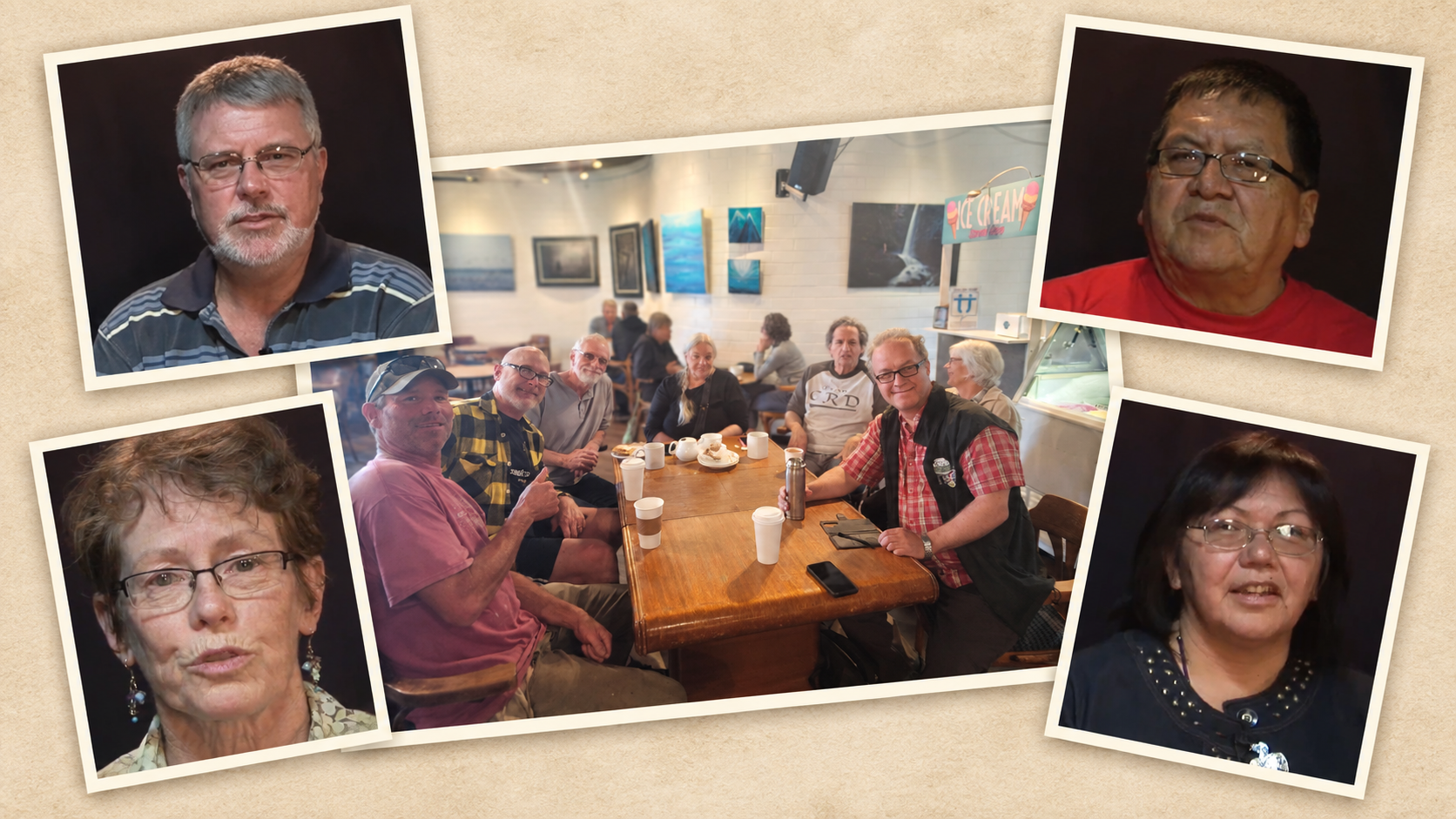
I discovered this video from 2013 recently.
The people in it have all moved through life since then, as I have. We are older, some have moved on to other things, some are raising families, and some are no longer with us. They are treasured friends and respected members of our community.
What struck me most was what they were talking about: listening, meeting with people, learning, and involving others. Building community.
That wasn’t something I started doing for that campaign. During my first term on Council, I was already holding a weekly coffee chat at JJ’s Café in Brentwood Bay. One of those conversations led me to learn about light pollution and eventually bring the issue to Council. I wrote about that in Something Hanke Taught Me 21 Years Ago.
Over the years I have kept coming back to the same idea. Local democracy works better when people can take part in it. I have pushed for more open access to Council, including webcasting meetings, and I have tried to create places where people can speak with me directly. Some of that history is in What I’ve Stood For.
My commitment to democracy is unwavering. I believe deeply in relational organizing. For me, that means building relationships, listening carefully, learning from one another, and making room for people to be part of the work rather than simply talking at them.
That has shaped how I have tried to serve on Council, and it still shapes how I work today.
I still believe democracy begins when people sit down together, tell their story and listen to each other.
Video from 2013
This Decision Belongs to the Next Council

Tonight is the second-last scheduled regular Council meeting before the municipal election.
If this Council moves tonight to lock in the sale of municipal lands or establish binding contracts connected with the Municipal Hall project, I believe that would be an outrageous act against the best interests of local democracy and this community.
We are only weeks from an election. Central Saanich residents are being asked to choose the Council that will govern the community for the next four years.
A decision of this magnitude should not be rushed through in the waning hours of the current Council’s mandate.
I have been clear about my concerns with the proposed Municipal Hall project. Others disagree with me. That is precisely why the democratic process matters. To move forward will do harm to what is left of the public's trust in this council.
The incoming Council should be able to consider the options, examine the financial implications, hear from the community and make its own decision without finding that the outgoing Council has already bound its hands.
A verdict on the Municipal Hall and the future of our public lands belongs to the next Council.
Not tonight.
Experience with Process
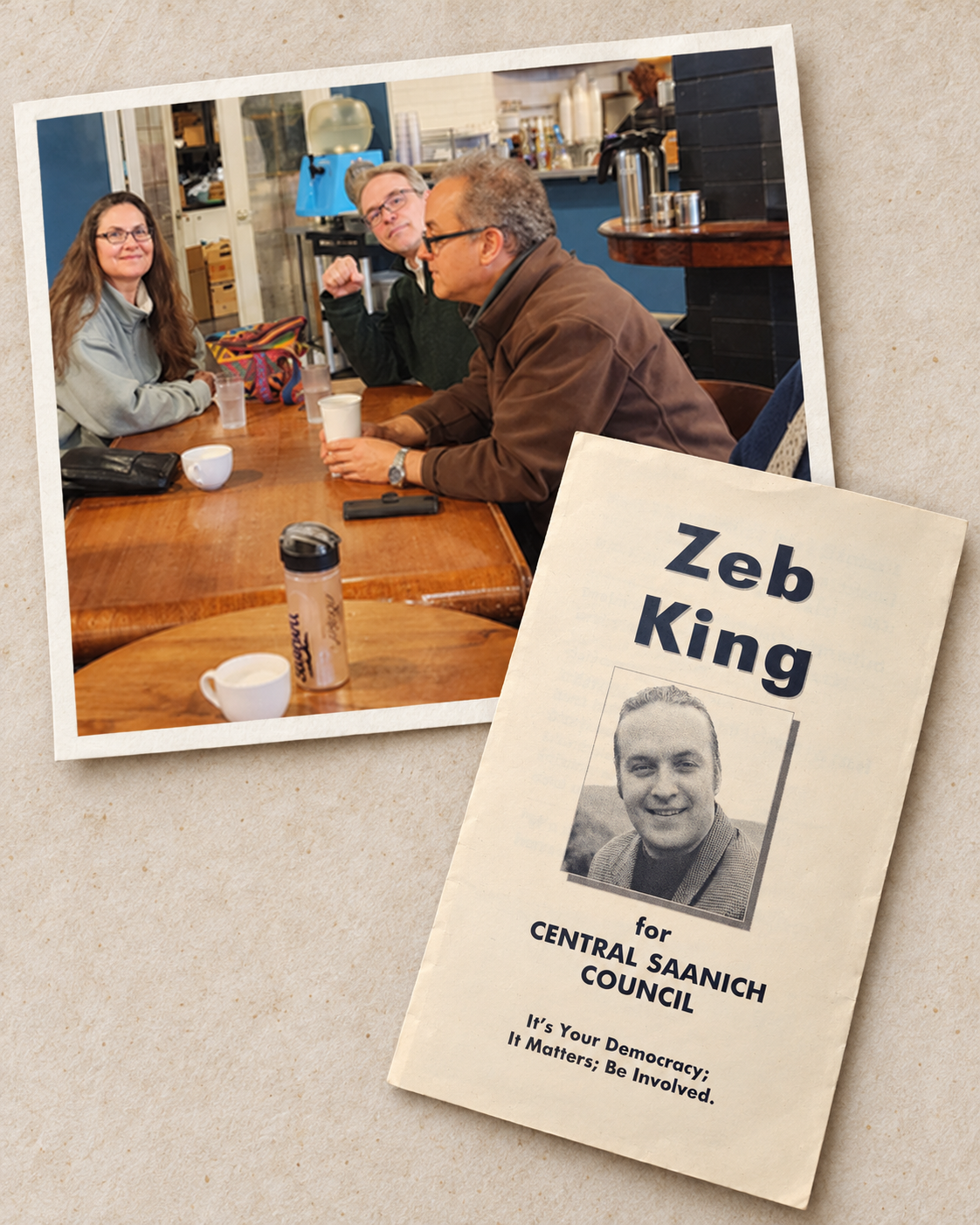
Over the years, I’ve tried to make “asking one more question” something I actually do, not just something I talk about.
I pushed for Council meetings to be webcast so more people could follow decisions. I’ve held regular drop-ins so residents can bring concerns directly to me. And I’ve brought forward motions when I thought Council needed more information before making a decision.
Good process means making it easier for people to be heard, and being willing to ask another question before deciding.
A Question I Asked About the New Municipal Hall

Last winter, when Council was discussing the proposed new municipal hall, I raised a question that I thought we needed to consider.
If we are going to build a municipal hall that could be here for the next 40, 50 or 60 years, what will municipal work look like over that time?
I brought forward a motion asking staff to look at how artificial intelligence, automation and changes in the way services are delivered might affect how much space we actually need in a new municipal hall.
Council voted against my motion.
My point wasn't that I knew what AI was going to do. I didn't then, and I don't now.
My point was that none of us knows.
Think about how much municipal work has already changed. There was a time when almost everything involved paper, filing cabinets, forms and people coming into the municipal hall. More and more of that work can now be done online.
AI and automation will bring more changes. Some work may disappear. Some jobs will change. There may be entirely new kinds of work that we haven't thought of yet.
So, before we spend tens of millions of dollars on a larger municipal hall, I think we should be asking what that might mean for the building we actually need.
After my motion was defeated, I wrote about this publicly in November 2025:
“The question isn't just what we need today or in the next 20 years; it's what kind of work will even exist over the lifetime of that building.”
Almost a year later, I am seeing residents raise the same question.
I don't pretend to know what municipal government will look like 20, 40 or 60 years from now. Nobody does.
But if we're going to make a decision that taxpayers will be paying for and that could shape our community for generations, I think it's worth asking these questions before we build.
Read more